
test article
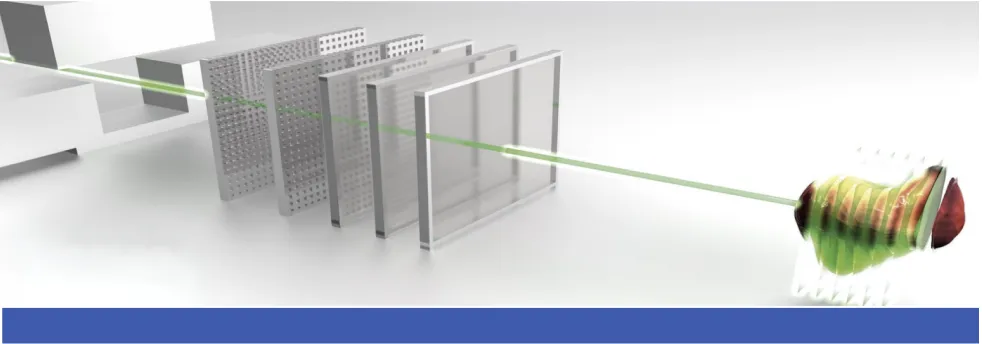
Globally, there are approximately 32,000 particle accelerators in operation, predominantly used in the medical field for cancer therapy and imaging. These accelerators function by extracting particles from an atom, such as protons, electrons, and charged nuclei (ions), and accelerating them to high speeds. This process concentrates vast amounts of energy into minuscule volumes. The result is a "beam" of accelerated particles, akin to a precise, small "knife" that can penetrate matter. This penetration causes the breaking of chemical bonds, extending up to DNA breaking and cell killing. Unlike X-rays, protons and ions (atomic nuclei) deposit most of their energy at a specific depth within tissues, and can kill radiation-resistant tumors. This precision minimizes the dose received by organs surrounding a tumor, thereby reducing potential damage to healthy tissue.
| This precision is achieved through the utilization of the "Bragg peak" phenomenon, where the maximum energy of accelerated ions is deposited at a specific depth inside tissues. This technique aligns with the ancient dream of “bloodless surgery”, allowing for precise energy delivery inside the bod | Bonjoru et bienvenue sur le site de Nimms |
Ion Therapy minimizes damage to tissues surrounding tumors, significantly reducing side effects for patients.
While proton therapy, a form of Ion Therapy, has become commercialised, heavier ion therapy is still in its early stages, despite its potential advantages. The diffusion of this technology is primarily limited by factors such as the size and cost of the required accelerator and a lack of extensive experimental data.